
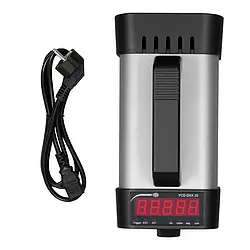
Description
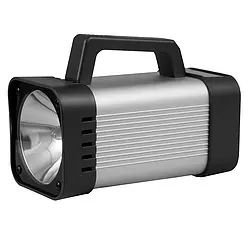
Portable stroboscope designed for professional use
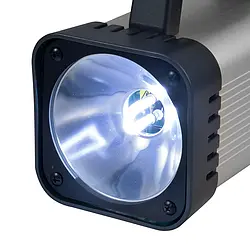
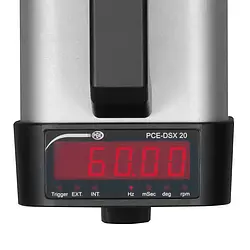
Features bright xenon flash and LED display
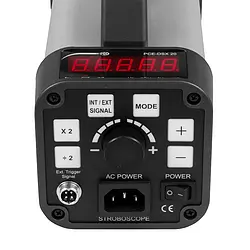
Allows for setting adjustments via buttons and rotary knob
The stroboscope is commonly used to measure speed, vibrations, or observe motion. This particular stroboscope has a compact and lightweight design, making it convenient to use in hard-to-reach areas. It is an ideal tool for professionals. The flash rate can be easily adjusted using the rotary knob and is displayed on the digital display. Continuous operation is possible with this stroboscope. Additionally, it has a trigger input for external triggering or synchronization. The device is powered by a mains cable. The keyboard allows for selecting half or double speed.
Applications:
This stroboscope is perfect for service technicians and maintenance personnel working with industrial equipment and machinery. It can be used to check speed, synchronization, and detect imperceptible errors. It has been used in various industrial processes and research and development.
- At bottling plants and labeling machines of breweries and mineral water producers
- On paper and printing machines: The stroboscope is useful for detecting register issues at high speeds. It allows for visualizing even the smallest process errors.
- On weaving machines in textile factories
- In the automotive industry
- On high-speed machines and motors: The stroboscope is primarily used to determine speed and check for concentricity of the shaft.
- At ventilation systems in the air conditioning industry
- On strip rolling mills in the steel industry
- Wherever rotating parts or high-volume production processes are involved
Note on safety when using the stroboscope: Keep a safe distance from objects brought to a standstill with the stroboscope and avoid touching the test object.
General information on stroboscope use:
The accompanying pictures demonstrate the correct usage of the stroboscope to generate accurate values or freeze frames. They also provide an example of how a double speed can occur. The correct procedure applies in general, even when dealing with drive belts and shafts.

When assessing a single belt drive, achieving optical standstill is easy by adjusting the stroboscope on a prominent point.

When inspecting multiple V-belts with the stroboscope, it is recommended to mark a reference line perpendicular to the running direction across all belts, preferably during repairs or maintenance shutdown.

Example of measurement on a wave:
For a well or optimally centered shaft with an impeller, the actual speed can be measured at optical standstill. However, if the impeller has axial impact or imbalance, the stroboscope might measure twice the speed, leading to misjudgments in local operations.


