





Description
Belt Tension Meter for Accurate Measurement of Belt Tension
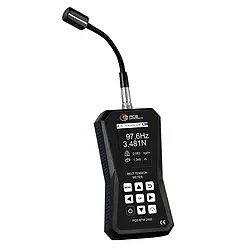
Memory for 750 measured values / graphic display / easy operation / multilingual menu / measurement in Hz and N
The Belt Tension Meter is a tool used for measuring the tension force of belts. It consists of a display device and a sensor head attached to a flexible gooseneck for easy positioning. This allows the sensor to measure the tension force even in hard-to-reach places. The device measures the belt tension in Newton (N) and the belt frequency in Hertz (Hz) when the belt is in a stationary state.
By measuring the natural frequency of the belt, which is generated by applying a small impulse, the Belt Tension Meter determines the actual tension of the belt. This data can be used to ensure the maximum service life of the machine components. The device can switch between N and pound force (US unit) for measurement units.
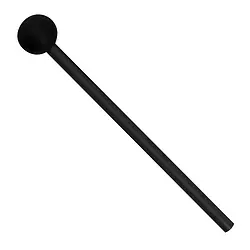
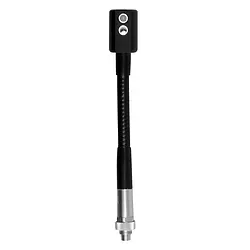
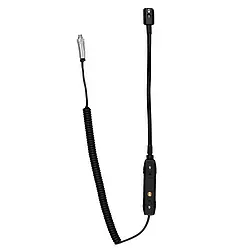
The belt tension is displayed as a frequency in Hz on the high-contrast display of the device. The device has a graphic menu with six different languages and can store up to 750 data records. It comes with a handheld device, standard sensor with gooseneck, magnetic holder, batteries, and operating manual. Optional accessories include an external sensor head with a spiral cable, device hard case, frequency mallet, and tripod.
Areas of Application for Belt Tension Meter
The Belt Tension Meter can measure the tension of timing belts, ribbed belts, and V-belts. It is important for maintaining, installing, setting up, and repairing belt drives. Regularly checking and adjusting the belt tension is necessary to ensure the machine components have a long service life. The correct preload force must be selected based on the forces to be transmitted. The device is suitable for applications in industrial production, motor technology, machine and tool construction, and maintenance and repair.
Definition of Belt Tension Force
Belt tension force is the force transmitted by the belt in a belt drive. The force is determined by the torque generated by the motor and the speed and diameter of the pulleys. Different forces occur in the strands of the belt to maintain balance. The frictional force at the drive pulley ensures torque transmission, while the centrifugal force increases with speed and affects belt grip. Properly adjusting the pretensioning force is crucial to ensure power transmission without excessive belt or bearing damage. Manufacturers provide belt tension recommendations in forces or frequencies. A Belt Tension Meter accurately determines the required belt tension after installation and before commissioning a belt drive.
Benefits of Measuring Belt Tension Force
Regularly measuring belt tension is crucial for optimal maintenance of machines and systems. Properly tensioned belts and aligned pulleys maximize service life. A Belt Tension Meter accurately determines the strand force when the belt is in a stationary state. Correct belt tension ensures optimal performance and prevents premature degradation. The meter is suitable for various applications, from household and office to industrial fields like conveyors, automotive industry, and agricultural machines. It can be used to check installation correctness and serve as a reference during regular maintenance checks.
- Measurement of the oscillation frequency of the drive belt
- Intuitive controls
- Calculation of the tension force
- Display of the belt tension in N
- 6 menu languages
- Memory for 750 measured values
- Sensor on gooseneck
- Input of belt length and belt mass


